By the time I arrived in Koyasan at the beginning of September, I already knew what this month’s essay would be about.
Believing.
I had actually started thinking about it the night before I left for Japan.
I was sitting with my girlfriends watching a documentary about an ultra-Orthodox Jewish community in New York. We were fascinated and horrified in almost equal measure. The rules, the restrictions, the certainty of it all. There seemed to be an answer waiting for almost every question before anyone had even thought to ask it.
We kept looking at each other and asking whether we could ever live like that.
Obviously, no.
At least that was our immediate, modern, educated-women-who-like-
And yet there was something disturbingly efficient about the mechanism.
You believe, and an extraordinary amount of life is already decided.
What you wear. How you live. What is expected of you. What you are allowed to want. What is forbidden. What suffering means. What happens when something goes wrong. Where you go when you are lost.
There is a frame for almost everything.
From the outside, this can look terrifying.
From the inside, I imagine it can sometimes feel like an enormous relief.
There was something almost luxurious about having an answer waiting for every question.
A few days later, I was in Koyasan.
At six in the morning, the bells rang and the monks rose.
They prayed, chanted, bowed, moved through rituals that had existed long before any of us in that room and would presumably continue long after we had gone home.
I imagine some mornings they are tired. I imagine there are cold mornings, irritated mornings, mornings when the body would prefer to remain exactly where it is.
Six in the morning is still six in the morning, enlightenment notwithstanding.
But the reason for getting up is not reopened for discussion.
They rise.
In Shingon Buddhism, belief does not stay politely inside the mind. It enters the body. It becomes posture, sound, repetition, the movement of the hands, the hour at which one wakes, the way one sits, the way one bows.
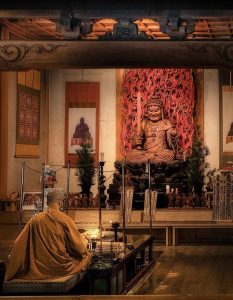
At some point, belief becomes part of the architecture of the day.
That was what stayed with me.
When you truly believe in something, you do not renegotiate it every morning.
You are not required to wake up and hold a fresh internal referendum.
Do I still believe this today? Is it still meaningful? Is this still what I want?
The body may resist what the belief requires of it. The belief itself remains somewhere underneath, already settled.
A Muslim may hate leaving a warm bed for fajr. The alarm can still feel offensive. But the question of why one gets up has been answered somewhere deeper and much earlier.
And I don’t think this belongs only to religion.
If you believe in someone from a peaceful place, you don’t wake every morning wondering whether they will love you that day. You aren’t required to study pauses, punctuation and response times as if intimacy were a badly managed investigation.
You live inside the knowledge of it.
If you believe in a goal, your days slowly begin to take its shape. You train, study, save, refuse certain things and tolerate others. You become boring in very specific ways.
You don’t begin your life again from zero every morning.
Belief has already made some of the decisions.
My parents believe in very different things.
My mother tells me to be more disciplined, to pray, to take refuge in God.
My father tells me that as long as I continue to live with dignity, I will keep eating the bread of this life.
They would probably disagree on the metaphysics.
But structurally, they are doing something remarkably similar.
My mother has God.
My father has dignity.
Both have truths they return to. Neither seems particularly interested in dragging those truths into court every morning and demanding fresh evidence.
And I think those beliefs have kept them standing in ways I am only beginning to understand.
Which may explain why the confession scene in Fleabag has stayed with me for so long.
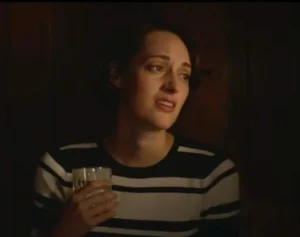
She is sitting opposite the priest, crying, exhausted, almost ashamed of how tired she is of making choices, and what comes out is not some grand confession of sin.
It is more ordinary than that.
She wants someone to tell her what to wear. What to eat. What to like, what to hate, what to listen to, what to joke about, who to vote for, who to love, how to tell them.
She wants someone to tell her how to live.
There is something almost childlike in the request, though not childish.
It is the exhaustion of having to author yourself all the time.
I understood that scene more than I would like to admit.
There have been evenings when I have said almost the same thing to my therapist.
I don’t want to decide anything.
I don’t want to decide what I should do next with my life. I don’t want to decide what the correct emotional response is. I don’t even want to decide what I should cook for dinner.
Could someone, for one evening, please just tell me what we are having?
My therapist once told me that what I was describing sounded like exhaustion with the responsibility and accountability of being an adult. (Without something larger to believe in, who among us doesn’t slip into an existential crisis from time to time??)
He was right.
There have been many times when I have wanted to take refuge in something so I could stop carrying myself for a while. There are times now. I am fairly sure there will be times again.
Sometimes adulthood feels less like freedom and more like being handed an endless series of doors and being told that no one else can choose which one you walk through.
When there is no God, no doctrine, no unquestioned tradition, no single structure standing above you, freedom comes with an exhausting amount of choosing.
Everything is yours to decide.
Your values. Your relationships. Your mistakes. Your meaning. Your dinner.
We wanted freedom from someone else deciding how life should be lived, and then discovered that someone still had to do the deciding.
Unfortunately, that someone was us.
How much freedom can a person carry before freedom itself becomes another weight?
Maybe this is where belief starts to become purpose. Not some grand calling waiting to reveal itself, but something steady enough to organise a life around. Something that makes certain choices before you have to make them all over again.
For a long time, I thought I had just become less spiritual.
I meditated less. I was less patient with my thoughts. I found it harder to leave things alone without following them down every corridor they opened.
It would be convenient to blame meditation. Then I could sit on a cushion for twenty minutes a day and eventually return myself to factory settings.
But that doesn’t explain it.
There were periods when I meditated very little and could still let things go.
What I had then was somewhere to put them.
We say let go as if it were an uncomplicated physical instruction.
Open your hand.
Release.
Move on.
Beautiful.
Into what?
When life was no longer larger than me, I had to become large enough to carry all of it myself.
Every question, every disappointment, every person who changed their mind, every plan that refused to become the life I had imagined, every definition I once trusted and later found myself rewriting.
Once there was nothing larger than me to hand those things over to, they remained with me.
They became mine to understand, mine to repair, mine to carry, mine somehow to turn into meaning.
It is a great deal to ask of one person.
Somewhere in all of this, I also began to grow suspicious of our obsession with self-belief.
We are constantly told to believe in ourselves, love ourselves, choose ourselves, become ourselves.
I have done an unreasonable amount of becoming myself.
It is tiring work.
If you do not begin with the belief that life is larger than you, I am not sure how far believing in yourself can take you.
There comes a point when the self is being asked to provide meaning, direction, hope, explanation, purpose, and a reason to get up the next morning.
That is a very heavy load for one human being.
There is also, I think, a fundamental difference between spiritual belief and most of the other things we call belief.
The others are tested here.
You believe hard work will eventually be rewarded, and then you watch somebody work less and receive more.
You believe love will find you if you remain open, kind, healed, self-aware and sufficiently familiar with your attachment style, and then someone who has apparently never examined a single feeling in their life gets happily married.
You believe that if you behave correctly, life will eventually respond correctly.
Life has never signed this agreement.
These beliefs live in a measurable world.
We gather evidence. We compare. We look sideways at other people’s lives. We notice what they received and what we didn’t.
We revise.
Sometimes the belief cannot survive the results.
Spiritual belief has a different relationship with proof.
Its final answer does not necessarily belong here.
Something terrible can happen without immediately destroying the entire structure.
There may still be a reason.
There may still be meaning.
There may be something beyond what can presently be seen.
There may even be no explanation available to you at all, and the belief survives that too.
There is something almost unfairly powerful in this.
A belief that cannot be entirely defeated by what happens on an ordinary Tuesday has a considerable advantage over most of the things we build our lives around.
Looking back, I think that was what I recognised in Koyasan.
The monks had something already waiting for them when they woke up.
My mother has something waiting for her when she prays.
My father has something he can return to when life becomes difficult.
They do not have to manufacture the foundation again each morning.
A friend said something to me recently, at a moment when I needed it more than he probably realised.
He told me that during one of the lowest periods of his life, dying had begun to feel like cheating in the game.
If he wanted the peace at the end, he said, then he first had to take responsibility for living.
I have thought about this often since.
It changed something in the way I was thinking about belief.
I had begun to envy belief for the surrender it seemed to offer: somewhere to place what I could no longer carry, somewhere outside myself where unanswered things might be allowed to remain unanswered.
But belief also asks something of you.
It gives you a reason to get out of bed when the bell rings.
To participate.
To remain inside your life.
To take responsibility for the part that is yours while accepting that the whole thing was never yours to control.
I am beginning to think those two things were never opposites.
Believing that life is larger than you may be exactly what makes it possible to stop trying to control all of it and still take your own small portion seriously.
This is where belief and purpose begin to touch.
Purpose is often spoken about as if it were something enormous waiting to be discovered, as though one day you will finally understand what you were put here to do and the entire thing will arrange itself neatly around that answer.
I am not sure it works like that.
Maybe purpose is belief stretched across time.
Something you trust enough to organise your life around.
Something that tells you where to place your attention.
Something that makes certain choices easier because they have already been answered somewhere deeper.
Some people pray. Some return to the principles they trust.
The monks in Koyasan wake when the bells ring.
And Fleabag, crying in a confessional, asks someone else to tell her how to live.
I think I have spent a long time wanting the same thing while also insisting that nobody should ever tell me what to do.
Which is inconvenient.
I don’t know exactly what I believe in anymore.
Also inconvenient, for someone writing an essay called Believing.
But I know what I miss.
I miss having something that does not need to be rebuilt every morning.
Something that survives mood, disappointment, other people’s choices, and the occasional collapse of everything I thought I understood.
Something larger than my plans, my relationships, my idea of who I am.
Something I can give what I cannot carry without giving away responsibility for what I can.
Maybe that is what I am looking for now: not an answer to life, but something worth organising a life around.